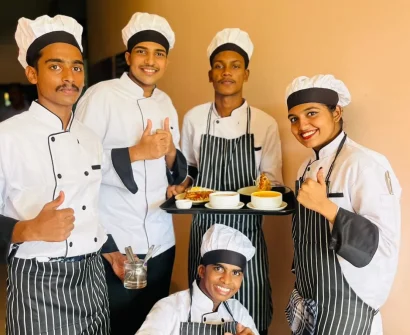
Choosing to study hotel management is more than a degree decision — it is a career investment. One of the most compelling reasons students enroll in top hotel management institutes is the promise of 100% placement support. But what does that really mean? Behind that headline figure lies a sophisticated, multi-layered system of industry partnerships, skill-building programs, and career mentorship that transforms students into hospitality professionals ready to thrive on day one.
What “100% Placement Support” Actually Means
Many students misinterpret “100% placement” as a guarantee that every graduate will be employed immediately after passing out. In reality, it refers to a comprehensive commitment by the institute to provide every enrolled student with all the resources, guidance, training, and opportunities needed to secure a job in the hospitality industry. This includes resume building, mock interviews, industry networking events, campus recruitment drives, and dedicated career counseling sessions.
Reputed institutes go a step further — they track placement rates rigorously, maintain alumni employment data, and continuously update their programs to align with industry demands. The “100%” reflects effort and infrastructure, not just a number.
Dedicated Placement Cells and Career Centers
The backbone of any strong placement record is a dedicated placement cell that operates throughout the year. These cells are staffed by experienced career advisors, industry liaison officers, and former hospitality professionals who understand exactly what employers are looking for. They do not simply organize recruitment drives; they are deeply involved in shaping students’ professional identity from the first year itself.
Placement cells maintain active, updated databases of hiring companies and regularly communicate with HR departments at hotels, resorts, airlines, cruise lines, event management firms, and restaurant chains. This constant relationship-building ensures that job opportunities flow to students consistently rather than in one concentrated final-year rush.
Industry Tie-Ups with Leading Hotel Chains
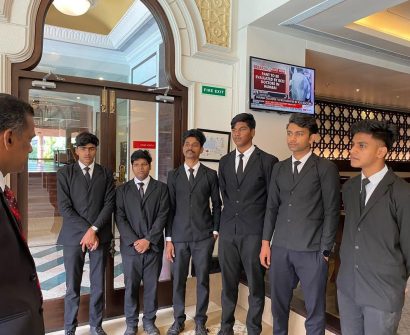
One of the most powerful pillars of placement support is the network of Memoranda of Understanding (MoUs) and formal partnerships that institutes sign with hospitality brands. Top hotel management colleges have long-standing agreements with global chains such as the Taj Hotels, Marriott International, ITC Hotels, Hyatt, Hilton, Oberoi Group, and dozens of regional and boutique hotel brands.
These tie-ups are not merely ceremonial. They translate into structured internship pipelines, pre-placement offers for outstanding interns, and priority recruitment slots during campus drives. Hotels benefit because they get access to trained, institution-vetted talent aligned with their service culture; students benefit because they enter a professional environment with a foot already in the door.
Industrial Training as the Placement Catalyst
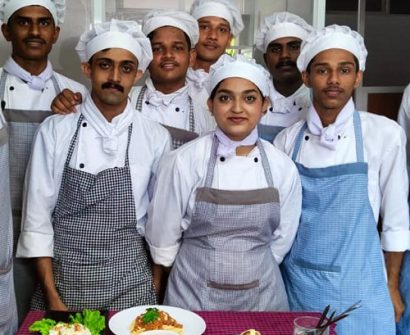
Hotel management education is unique in its emphasis on practical learning through mandatory industrial training periods. Students are placed in real hotel environments — often five-star or internationally branded properties — where they rotate through departments such as front office, housekeeping, food and beverage production, food and beverage service, and banqueting.
This period is not merely an academic exercise. It is, in effect, a long-form interview. Students who perform exceptionally during their industrial training are frequently absorbed by the same property or recommended to group properties. Institutes actively coordinate with their training partners to monitor student performance and intervene if any student is underperforming, ensuring that the experience remains a genuine stepping stone to employment.
Personality Development and Soft Skills Training
Technical skills alone do not secure placements in the hospitality industry, where guest interaction, cultural sensitivity, and emotional intelligence are as valuable as culinary expertise or front desk proficiency. Recognizing this, top institutes invest significantly in personality development programs, communication training, grooming workshops, and behavioral interviewing practice.
Students participate in role-play exercises simulating guest complaints, mock check-in scenarios, and team management challenges. Language training — particularly in English and sometimes international languages — is often embedded into the curriculum. The goal is to produce graduates who project confidence, warmth, and professionalism, qualities that hiring managers at luxury properties specifically scout for during campus interviews.
Campus Recruitment Drives and Job Fairs
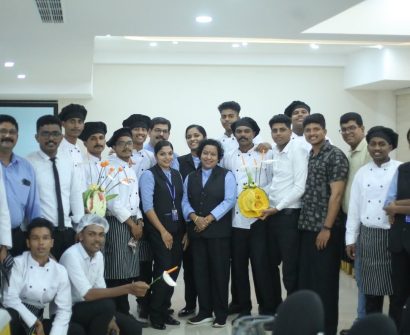
A well-established institute will host multiple campus recruitment drives every academic year, inviting companies ranging from five-star hotel groups to airline hospitality divisions, hospital catering services, event management firms, and facility management companies. These on-campus drives create a competitive but supportive environment where students can face multiple recruiters within a single week.
Beyond the campus, institutes also send students to off-campus job fairs, industry expos, and hospitality summits where they can network directly with senior professionals and HR leaders. Some institutes organize annual “Hospitality Career Fairs” that attract hundreds of recruiters under one roof, giving students exposure to opportunities across every segment of the industry — from luxury resorts to healthcare catering to corporate dining.
Resume Building, Interview Coaching, and Aptitude Preparation
Many students enter placement season unsure of how to present themselves on paper or in person. Placement cells address this with structured resume-writing workshops that emphasize clarity, hospitality-specific skill keywords, and achievement framing. Mock interview sessions — conducted both by internal faculty and invited industry professionals — prepare students for the intense screening processes that global hotel brands often deploy.
Aptitude tests, group discussions, and situational judgment exercises are all practiced beforehand so students are not caught off-guard. For premium brands that conduct multi-round interviews, preparation modules are tailored specifically to those companies’ known formats. This level of individualized preparation is what separates a well-supported placement program from a generic career services office.
Alumni Networks as Placement Multipliers
A thriving alumni network is one of the most underrated placement tools in hotel management education. Graduates who have risen to senior positions in major hospitality brands often return to their alma mater as recruiters, guest lecturers, or mentors. This creates a virtuous cycle: current students gain direct access to decision-makers, and alumni benefit from being seen as talent pipelines for the institutions they trust.
Many institutes formalize this through alumni mentorship programs, where final-year students are paired with mid-career alumni who guide them through the job search process. Alumni also share referrals for openings that never make it to public job boards — a significant advantage in an industry where many top positions are filled through internal networks.
Placement in Diverse Hospitality Sectors
A common misconception is that hotel management graduates only work in hotels. In reality, placement support covers a wide spectrum of industries that require hospitality expertise. Students are placed in airlines and airport lounges, cruise ship operations, hospital and healthcare catering, corporate cafeteria management, luxury retail customer experience, event and wedding management, tourism boards, and even entrepreneurship incubation.
Top institutes deliberately broaden their recruiter base to cover all these sectors, ensuring that graduates are not limited to a single industry path. Students with culinary specializations may enter food and beverage startups or cloud kitchens; those with a flair for operations might join facility management or hospitality consulting firms. This diversity of placement options is a direct result of proactive industry outreach by the placement cell.
Luxury hotels & resorts
Airlines & aviation hospitality
Cruise line
Healthcare catering
Corporate dining
Event management
Tourism & travel
Hospitality startups
Post-Placement Support and Career Growth Guidance
The best institutes do not consider their job done when a student accepts an offer. Post-placement support — including career counseling for those who change jobs within the first year, guidance on higher education abroad, preparation for management development programs within hotel chains, and connections to advanced certification bodies — ensures that the institute remains a long-term career partner.
Some placement cells maintain active communication with placed graduates for up to two years, monitoring their growth and stepping in if a graduate faces workplace challenges or wishes to transition roles. This ongoing relationship reinforces the institute’s reputation in the industry and motivates future batches to trust the placement process fully.